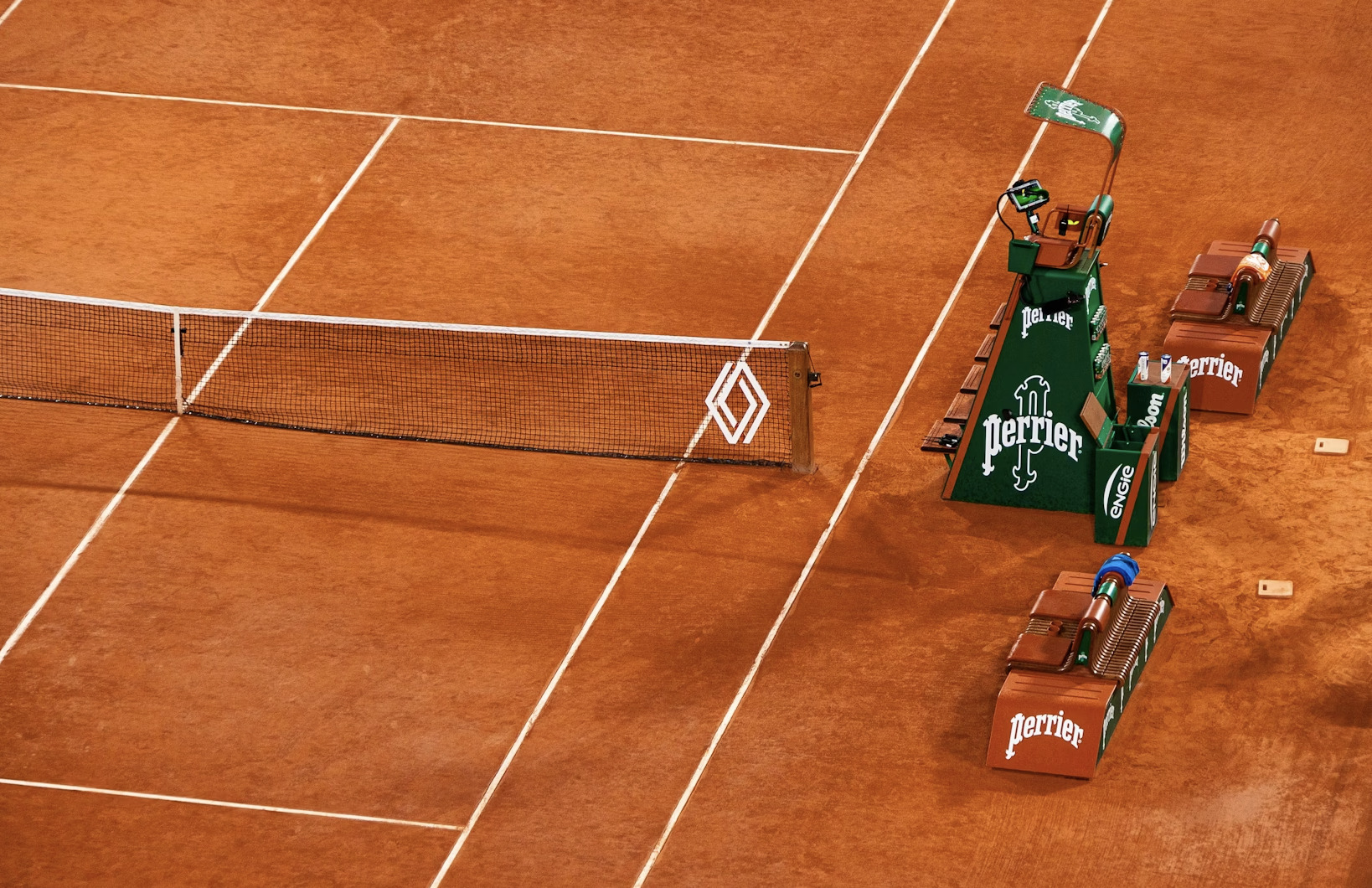
For most of the last decade, the second Grand Slam of the year felt like a bracketing exercise rather than an open competition. Rafael Nadal had built a fortress on the red clay of Boulogne that visitors approached with deference rather than ambition. The bracket was a structure inside which his eventual victory was assembled, and the only real question was who would be allowed to play themselves into a respectful straight-sets defeat in the final.
That era is now over. The 2026 edition of Roland Garros, opening on 25 May at Stade Roland Garros in the 16th arrondissement, arrives with no defending Nadal, no clear single favourite, and the deepest top-of-draw field the men's clay season has produced in fifteen years. The women's draw is equally rich, with three or four credible contenders separated by less than the difference of a single weekend's form.
This is the year clay court tennis comes back into focus, not as a coronation but as a competition. Here is the state of play heading into Paris.
The men's draw — three serious contenders, several genuine threats
Carlos Alcaraz arrives in Paris as the player most readers will name first when asked who wins this tournament. The Spaniard's clay record over the past three seasons is the strongest on tour, his game adapts to the surface with fewer compromises than any of his rivals, and his shoulder, which limited him at Madrid in 2025, has by all accounts recovered fully. The danger for Alcaraz is not the absence of weapons. It is the schedule. His clay swing in 2026 has been heavier than usual, and the deep runs at Monte Carlo, Madrid and Rome have accumulated a quiet fatigue that the best-of-five-set environment of a Grand Slam tends to expose.
Jannik Sinner is the favourite of the analytics crowd for a different reason. The Italian's improvements on clay over the past eighteen months are substantial. He has added the topspin variation and the patience for extended baseline exchanges that his earlier game lacked, and his physical condition at the end of long sets is the best on tour outside Alcaraz himself. The case against Sinner is that Roland Garros remains the slam he has not yet won, and the psychological weight of that absence has a track record of producing tightness in the third week. Whether 2026 is the year he sheds that pattern is the most interesting open question in the draw.
Novak Djokovic is here, of course. The Serbian's clay swing leading into Paris has been measured rather than dominant. He has chosen his tournaments deliberately, conserved his body, and arrived in Paris with the calculated rhythm that has produced four of his last six Grand Slam runs. Writing Djokovic out of any major draw at this stage of his career has, repeatedly, been a mistake. His path through the bracket will likely be more difficult than the top two seeds, but his ability to reset between sets is unmatched, and a deep run is the baseline expectation rather than the surprise.
Three other names are worth tracking. Holger Rune has been quietly assembling the best clay results of his career and has the game to take down any of the top three on a good day. Alexander Zverev, the runner-up in 2024, has the experience and the surface affinity but the consistency questions remain. Felix Auger-Aliassime has had a quietly excellent 2026 and has the kind of all-court game that translates well to Paris when the conditions are heavy.
The women's draw — a generational moment
The women's competition is, if anything, more open than the men's, and the storyline is more generational.
Iga Świątek is still the favourite. The Polish player's record at Roland Garros over the past five seasons is the most dominant by a current player, and her clay-court ball-striking has, in 2026, returned to the level that produced her 2022 and 2023 titles. The story is no longer whether her game suits the surface. It is whether the rest of the tour has finally closed the gap enough to take the title from her.
Aryna Sabalenka has had the best off-clay results among her contemporaries and has adapted her game on the red dirt with visible effort. Her first-strike pattern is harder to construct on clay than on hard courts, but the depth of her ball and the improvement in her movement over the past year have made her a credible deep-run player. She has reached the semifinals in Paris twice and a final appearance is overdue.
Coco Gauff is the most interesting wildcard in the draw. The American's results in 2025 were inconsistent but flashes of the form that produced the 2023 US Open have been visible in the spring clay swing of 2026. If she can construct a draw without an early upset, she has the game to reach the second week with the energy intact to do something with it.
Mirra Andreeva is the youngest top contender and the player whose stock has risen most rapidly over the past twelve months. Whether 2026 is too early for her first major title is a judgement call. The form curve says it is not.
The story to watch is not just who lifts the trophy on 7 June. It is whether the women's tour produces a new clay-court hierarchy in this fortnight, or whether the Świątek era extends for another year.
What the conditions are doing this year
The technical question that often goes unwritten in Roland Garros previews is what the court conditions actually favour. The 2026 surface preparation, by all accounts from the players who practised on the courts the week before the tournament, is slightly heavier and slightly slower than 2025. The clay base has been replenished and compacted with the methodology that the groundskeeping team has refined over the past three years, and the result is conditions that reward patience, defensive ball-striking and longer rally tolerance.
This favours Alcaraz, Sinner, Świątek and Sabalenka in roughly that order. It works against players whose game relies on first-strike tennis or short-rally dominance. The forecast for the first week predicts cooler-than-average daytime temperatures, which will slow the surface further, and intermittent showers, which could disrupt scheduling and benefit the players with the strongest physical conditioning to absorb extended layoffs.
The betting markets, briefly
The pre-tournament markets have Alcaraz as the men's favourite at approximately +120, Sinner at +220, and Djokovic at +500. The depth of the field is reflected in the prices behind them, with Rune, Zverev and Auger-Aliassime all sitting between +1500 and +3000 — substantially shorter than the equivalent prices for the equivalent seeded players a year ago.
On the women's side, Świątek is the favourite at approximately +180, Sabalenka at +400, Gauff at +700, and Andreeva at +1000. The compression at the top of the women's market reflects the genuine view that there is no clear single favourite, and any of the top four reaching the final would not be considered an upset.
For value-seekers, the second-round and third-round upset markets are likely to be unusually productive this year. The draw is deeper than it has been since 2010, the surface conditions amplify the importance of the schedule, and the early rounds are likely to produce more surprises than the bookmakers have priced in.
What to watch for
Three things will tell us early how the tournament is going to develop.
First, how Alcaraz manages his energy in the first week. If he wins his first three matches in straight sets and saves his physical reserves, he is the favourite. If he gets dragged into a fifth set in the second or third round, the trajectory of the tournament changes substantially.
Second, whether Sinner's serve holds up under the slower conditions. His first-serve percentage on clay is historically lower than on hard courts, and a heavy court magnifies the importance of holding serve cleanly. If his service game is functioning, he is a genuine threat to win the title.
Third, whether the women's draw produces a new finalist alongside Świątek. The story of the tournament is, in some ways, less about whether Świątek wins than about who establishes themselves as the year's most credible challenger. The outcome of the second-week matchups on the women's side will define the rest of the 2026 season.
The two-week tournament begins on 25 May, the women's final is scheduled for Saturday 6 June, and the men's final on Sunday 7 June. By the second weekend, the contours of the next clay-court era will be visible, and the long shadow that Nadal cast over this tournament will have finally lifted enough to let the new generation define what comes next.