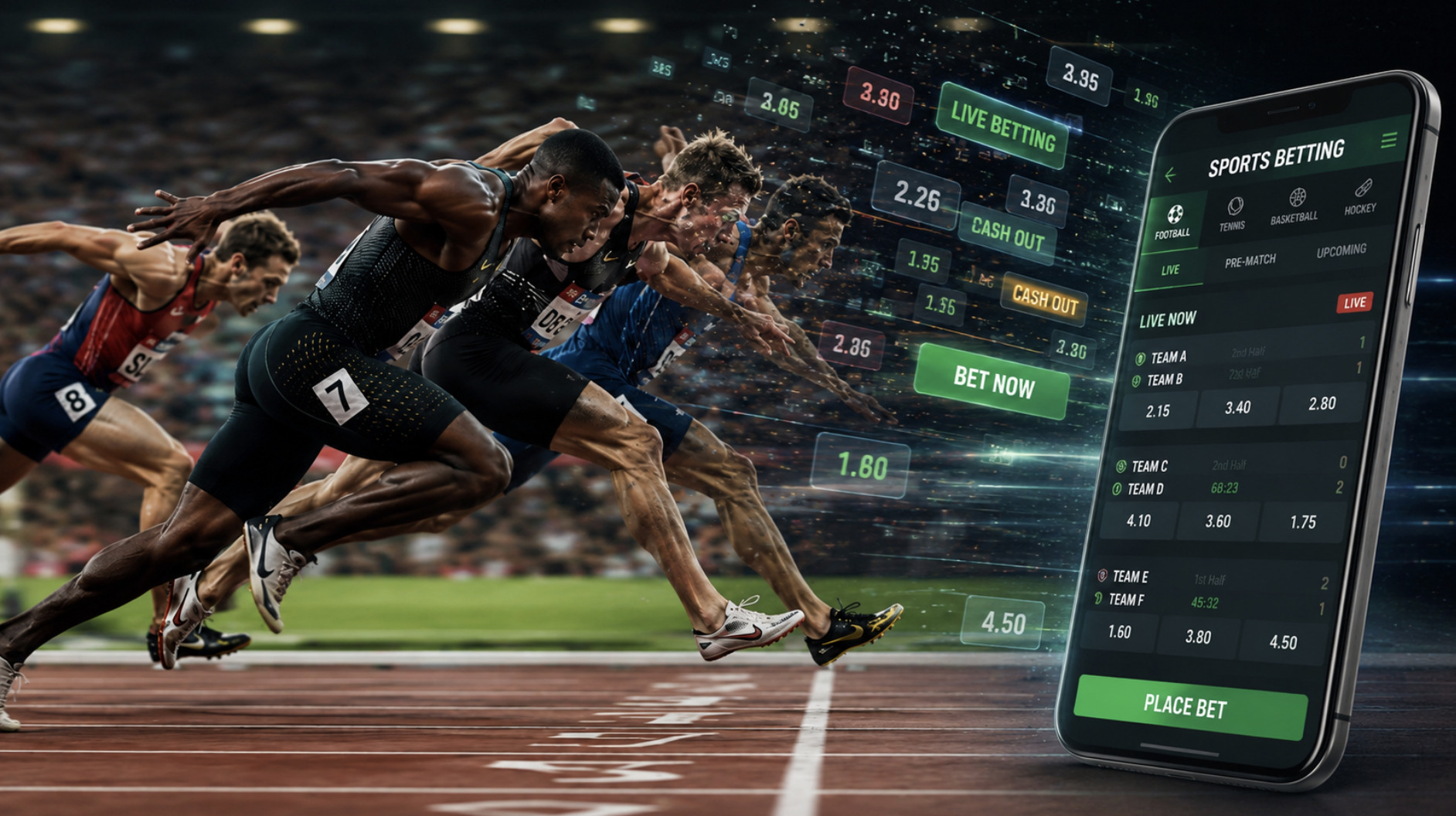
Imagine a football match where you already knew the final score, a chess game whose every move was settled in advance, or a race whose winner had been announced before the starting gun. The drama would collapse instantly. What makes us lean forward, hold our breath, and shout at the screen is not the outcome itself but the fact that we do not yet know it. Uncertainty is the engine of excitement in every competition, and understanding why reveals something fundamental about how human beings experience risk, anticipation, and reward.
The Thrill Lives in Not Knowing
At its core, a competition is a question that has not yet been answered. Who is faster, stronger, smarter, luckier? The moment that question is resolved, the tension that held us evaporates. This is why the most memorable sporting moments are almost always the ones that hung in the balance until the final seconds: a penalty shootout, a buzzer-beating shot, a photo finish decided by thousandths of a second. The excitement is not stored in the result but in the suspense that precedes it. We are not really watching to learn who won; we are watching to live inside the not-knowing for as long as it lasts.
The Outcome Uncertainty Hypothesis
Economists who study sport have a name for this intuition: the outcome uncertainty hypothesis. The idea is straightforward — fans are drawn to contests where the result is genuinely in doubt, and they lose interest when one side is overwhelmingly likely to win. Leagues understand this instinctively, which is why so many of them build mechanisms to keep competition balanced. Salary caps, draft systems that hand the best new talent to the weakest teams, and promotion and relegation all exist to prevent the dynasty problem, where a single dominant club turns every fixture into a foregone conclusion. A league in which everyone has a plausible chance is a league worth following week after week. The unpredictability is not a flaw in the spectacle; it is the product itself.
Why Our Brains Crave the Unpredictable
The pull of uncertainty is not merely cultural — it is wired into us. Neuroscience suggests that the brain's reward system responds powerfully to anticipation, and especially to outcomes it cannot fully predict. When a result is uncertain, the gap between what we expect and what actually happens produces a spike of attention and emotional intensity that a guaranteed outcome simply cannot match. A win we were sure of feels like a formality; a win we doubted feels euphoric. The same mechanism explains why an underdog's victory thrills us far more than a favorite's, and why a comeback from a hopeless position is told and retold for decades. Our minds are tuned to pay closest attention precisely when they cannot be sure what comes next, because that is where the most important information — and the strongest feelings — tend to live.
The Designer's Sweet Spot
Anyone who designs competitive experiences, from board games to esports, learns to manage uncertainty with care, because too little and too much are both fatal. A game decided purely by skill, with no variance at all, quickly becomes discouraging: the stronger player always wins, and weaker players stop showing up. But a game decided purely by chance is equally hollow, because effort and mastery count for nothing and the result feels arbitrary. The most enduring competitions sit in the sweet spot between the two, where skill clearly matters but a measure of unpredictability keeps every contest alive. This principle extends beyond traditional games and can be observed across many forms of entertainment, including platforms such as DicePalace Casino, where designers carefully balance structure and uncertainty to sustain long-term engagement.
This is why a touch of randomness can make a game more rather than less competitive: it gives the underdog a reason to try and the favorite a reason to stay sharp. The art lies in calibrating the balance so that the better competitor usually, but not always, prevails.When Certainty Kills the Drama
The clearest proof of uncertainty's value is what happens when it disappears. A blowout loses its audience by halftime. A title race settled with a month of fixtures still to play empties the stadiums. A tournament in which one entrant is so far ahead that the rest are competing for second place feels less like a contest than a coronation. Organizers dread the foregone conclusion because they know it drains the life out of the event. Even individual brilliance can become monotonous if it removes all doubt — a champion who never loses eventually struggles to draw the same crowds, because the central question their sport is supposed to ask has stopped being a question at all. We admire dominance, but we are gripped by jeopardy.
Stakes, Narrative, and the Shared Experience
Uncertainty also gives competition its story. A narrative needs tension, and tension requires an unresolved question hanging over the characters. The underdog who might just pull it off, the champion who might finally fall, the rookie who might announce themselves on the biggest stage — these arcs only work because the ending is not written yet. Crucially, this drama is something we experience together. When the outcome is uncertain, a stadium full of strangers, or millions of viewers scattered across the world, are bound together by the same held breath. We are all asking the same question at the same moment, and we will all learn the answer at once. That shared suspense, multiplied across a crowd, is part of why live competition feels so alive in a way that a known result never can. Recordings of finished matches, however thrilling the action, never quite recapture it, because the one ingredient that mattered most — not knowing — is gone.
The Beautiful Risk
There is, finally, something almost philosophical in our love of uncertain contests. To watch a competition whose result is in doubt is to accept that things might not go the way we hope, and to find that prospect exhilarating rather than unbearable. We invest our emotions in an outcome we cannot control, and we do so willingly, again and again. That willingness to embrace risk for the sake of the feeling it produces says a great deal about us. We could choose certainty and the comfort it brings, but we keep returning to the edge of our seats, because a contest worth watching is one whose ending could still surprise us. Uncertainty is not the price we pay for excitement. It is the excitement itself.