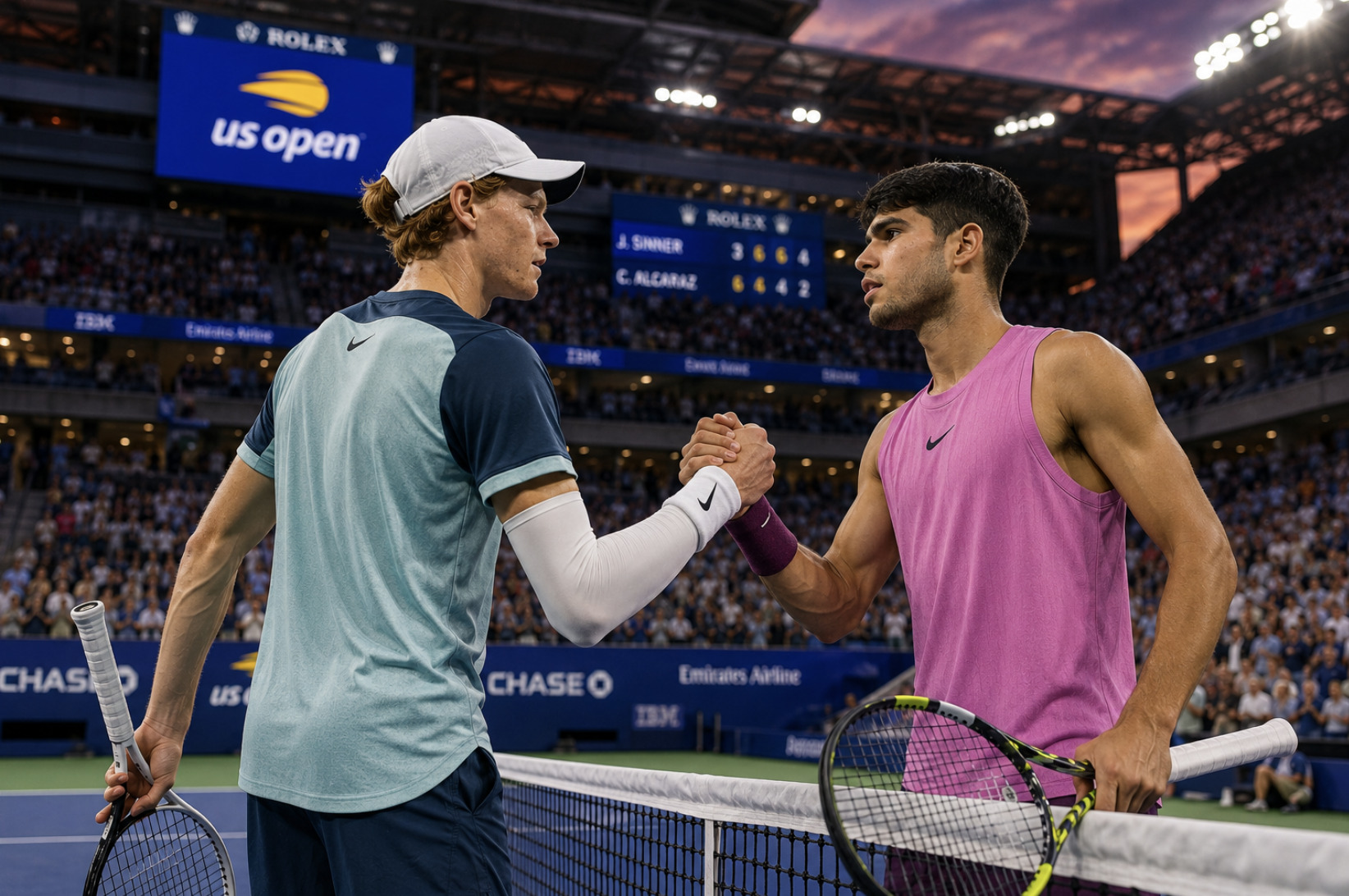
The last Grand Slam of the year arrives in New York with a familiar pair at the top of the bill and an unfamiliar amount of doubt hanging over them. The US Open 2026 runs from 23 August to 13 September, with the singles main draw beginning on 30 August, and on paper the men's title race looks like the same two-man rivalry that has defined the sport. Jannik Sinner against Carlos Alcaraz has become the fixture the tennis world revolves around. Yet beneath the obvious storyline sits a genuinely open tournament, shaped by injuries, form and the sense that, for once, the outcome is harder to call than the rankings suggest. Here is what to watch as the season's final major gets underway on the hard courts of Flushing Meadows.
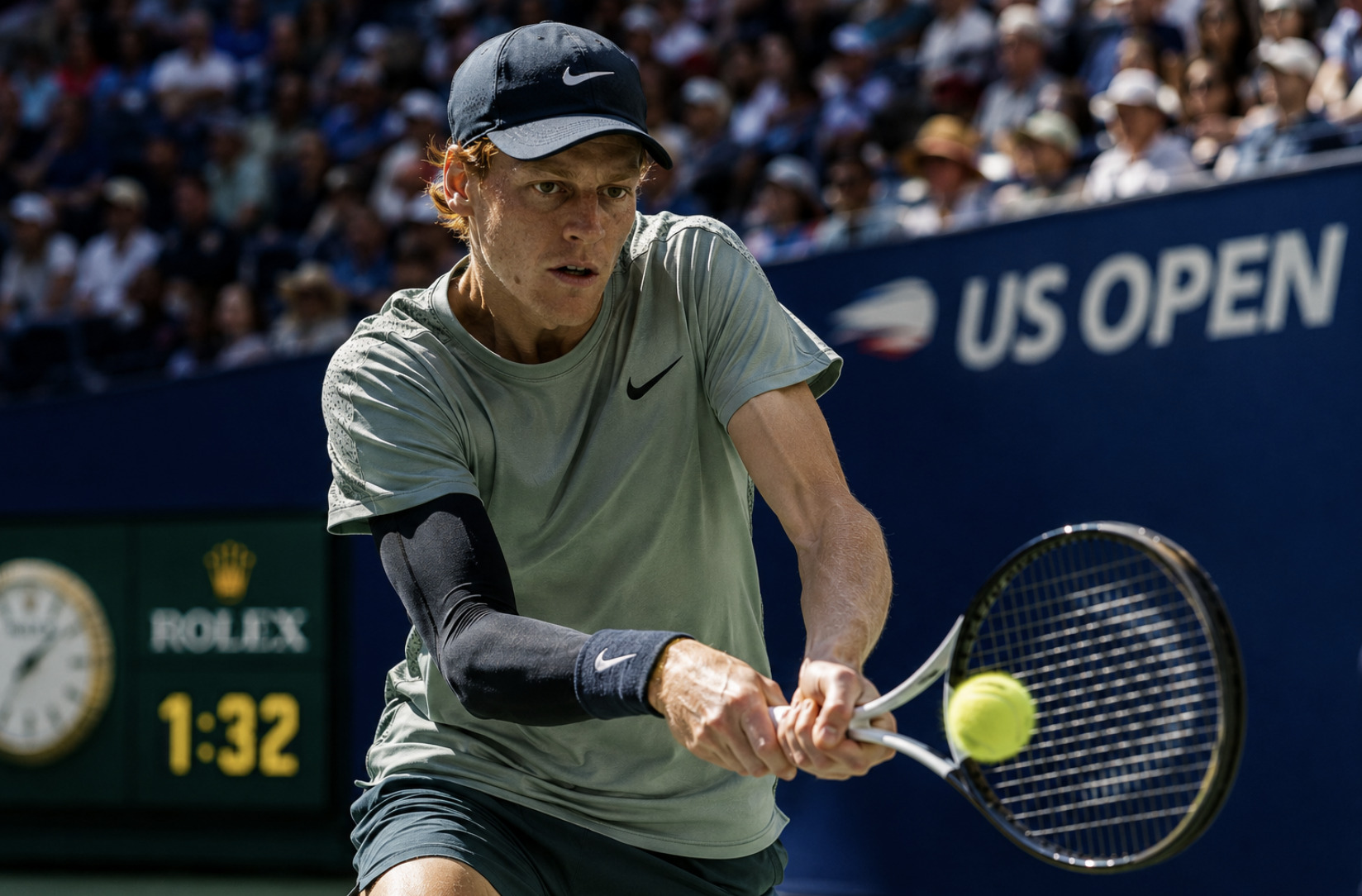
Sinner arrives as the man to beat
If you were setting the odds cold, you would start with Jannik Sinner, and you would not hesitate. The world number one comes into the US Open as the overwhelming favourite, and the numbers behind that status are genuinely daunting. Sinner has been close to untouchable on hard courts over the past year, and the surface at Flushing Meadows is his natural habitat — fast, true, and rewarding of exactly the relentless, flat-hitting baseline control that makes him so hard to break down. On this court, in this form, he is the closest thing tennis has to a machine.
Sinner's game travels particularly well to New York because the hard court removes variables. There is no clay to slow him down, no grass to introduce chaos; there is just a fast, predictable surface on which his precision and consistency compound point after point. He punishes short balls, absorbs pace and gives almost nothing away, and over a best-of-five match that attritional excellence tends to grind opponents into mistakes. He is not flawless — there is a knee issue he has been managing, and the physical demands of a two-week Slam are unforgiving — but he arrives as the favourite for good reason, and anyone hoping to lift the trophy will almost certainly have to go through him to do it. His summer, including his defence of a major earlier in the year that we covered in Sinner's Wimbledon defence and the denial of Zverev, has only hardened his status as the man to beat.
Alcaraz defends a title from behind
The great subplot, and the reason the tournament is more open than Sinner's favouritism implies, is the condition of the defending champion. Carlos Alcaraz won this title last year, beating Sinner in the final, and no one doubts that on his day he is the one player capable of matching and beating the world number one. But this year Alcaraz arrives from a very different place. He has been working back from a wrist injury that cost him a significant chunk of the season, and the fitness question hangs over his entire campaign. A returning player carrying a recent injury and a shortage of match sharpness is a very different proposition from one in full flow.
This is what makes his title defence so compelling. Alcaraz is capable of winning the tournament — his ceiling is as high as anyone's, and as champion he knows exactly what it takes to survive two weeks in New York. But a wrist injury is a particularly awkward setback for a player whose game is built on explosive shot-making and heavy topspin, and the lost months mean he comes in with less preparation than an event of this magnitude usually demands. The gap between what Alcaraz can do at his best and where his body and rhythm actually are is the central uncertainty of the men's draw. If he is close to full fitness, he is the one man who can beat Sinner over five sets. If he is not, the door opens for others.
The chasing pack and an unusually open draw
That door is what gives the US Open 2026 its unusual shape. When the two dominant players both carry question marks — Sinner managing a knee, Alcaraz returning from injury — the field behind them matters more than it has in some time. Alexander Zverev headlines the group of contenders capable of taking advantage if either of the top two falters, a powerful and experienced player who has been knocking on the door of a maiden Grand Slam title and for whom an event with wobbles at the top represents a real opportunity. He is the most obvious beneficiary of any slip from Sinner or Alcaraz, and his own form will be one of the tournament's key measures.
Beyond Zverev sits the usual layer of dangerous outsiders — players capable of a deep run if the draw breaks their way and the favourites are less than their best. A Grand Slam is long and physically brutal, and over two weeks the combination of fatigue, pressure and a single bad afternoon can undo even the strongest. The more doubt there is over the top two, the more these outsiders are worth watching, because it takes only one upset in the right part of the draw to blow a tournament open. This is not a year in which the final feels preordained, and that is precisely what makes the early rounds worth following rather than skipping to the second week.
Why the hard court raises the stakes
The surface itself sharpens all of this. Hard courts are the great neutraliser of tennis — faster than clay, more predictable than grass — and they tend to reward the game's most complete players while offering fewer places to hide. On clay a defensive grinder can frustrate a bigger hitter; on grass a big server can steal matches. On a hard court, the margins narrow and quality usually tells, which ordinarily favours a player like Sinner whose game has no obvious weakness to exploit. The surface removes excuses.
But the hard court also punishes bodies, and that is where the injury questions become decisive. The relentless pounding of best-of-five tennis on an unforgiving surface tests fitness as much as skill, and a player managing a physical issue faces a compounding risk over two weeks that a fully fit rival does not. For Sinner's knee and Alcaraz's wrist alike, the surface that suits their tennis also stresses exactly what they are trying to protect. This tension — a court that rewards their games while taxing their bodies — is part of why the tournament feels less certain than the rankings suggest. The best player does not always win a Slam; the player who best survives it does.
The verdict, and why it's worth watching
Weigh it all up and the US Open 2026 sits in a genuinely interesting place. Sinner is the deserved favourite, the most consistent and complete hard-court player in the world, and the smart expectation is that he goes deep. Alcaraz is the defending champion and the one man capable of beating him, but arrives with real uncertainty over his fitness and form. And behind them, a field led by Zverev waits for any opening, on a surface that rewards quality but tests the very bodies the top two are trying to preserve. That combination — a clear favourite, a wounded champion, and a hungry pack — is the recipe for a compelling fortnight.
The likeliest story remains another chapter in the Sinner–Alcaraz rivalry that has come to define men's tennis, and a final between them would be the outcome the sport is quietly hoping for. But the value of this tournament lies in how much has to go right for that script to hold. Alcaraz has to prove his fitness; Sinner has to manage his knee through seven best-of-five matches; and the contenders behind them have to be kept at bay. Any of those threads could snap, and if one does, the most open Grand Slam in years could produce a champion few expected. That uncertainty, more than any single favourite, is the reason to tune in from the first round rather than waiting for the last.
Frequently asked questions
When is the US Open 2026? The tournament runs from 23 August to 13 September 2026, with the singles main draw beginning on 30 August. The draw is expected to be confirmed shortly before the main-draw matches get underway.
Who is the favourite for the US Open 2026? Jannik Sinner, the world number one, arrives as the overwhelming favourite. He has been dominant on hard courts over the past year, and the surface at Flushing Meadows suits his precise, relentless baseline game particularly well.
Can Carlos Alcaraz defend his title? He is capable of it — Alcaraz won last year by beating Sinner in the final and remains the one player most able to match him. But he arrives working back from a wrist injury that cost him part of the season, so his fitness and match sharpness are the biggest questions of the men's draw.