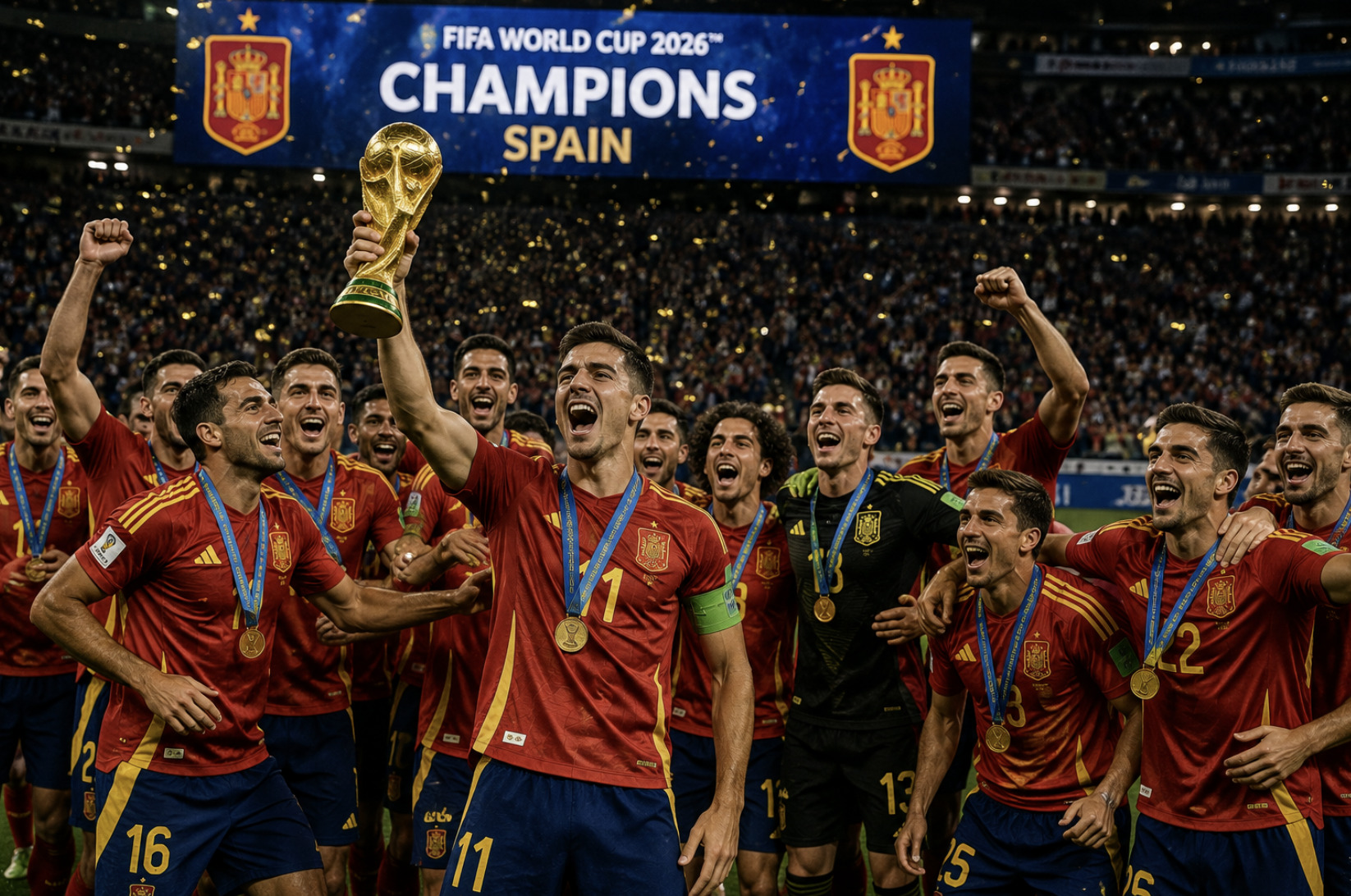
Some World Cup finals are settled by a moment of brilliance; others are won by something harder to romanticise and more difficult to beat. Spain's triumph at the 2026 World Cup belonged firmly to the second category. On 19 July, at MetLife Stadium in New Jersey, they beat Argentina 1–0 after extra time to claim their second world title, with substitute Ferran Torres striking the only goal deep into the additional period. It was not a spectacle of open, end-to-end football. It was a masterclass in control, patience and defensive discipline — a victory built on the conviction that if you never lose your shape, you will eventually find your moment. And in winning it, Spain achieved something no nation had managed before.
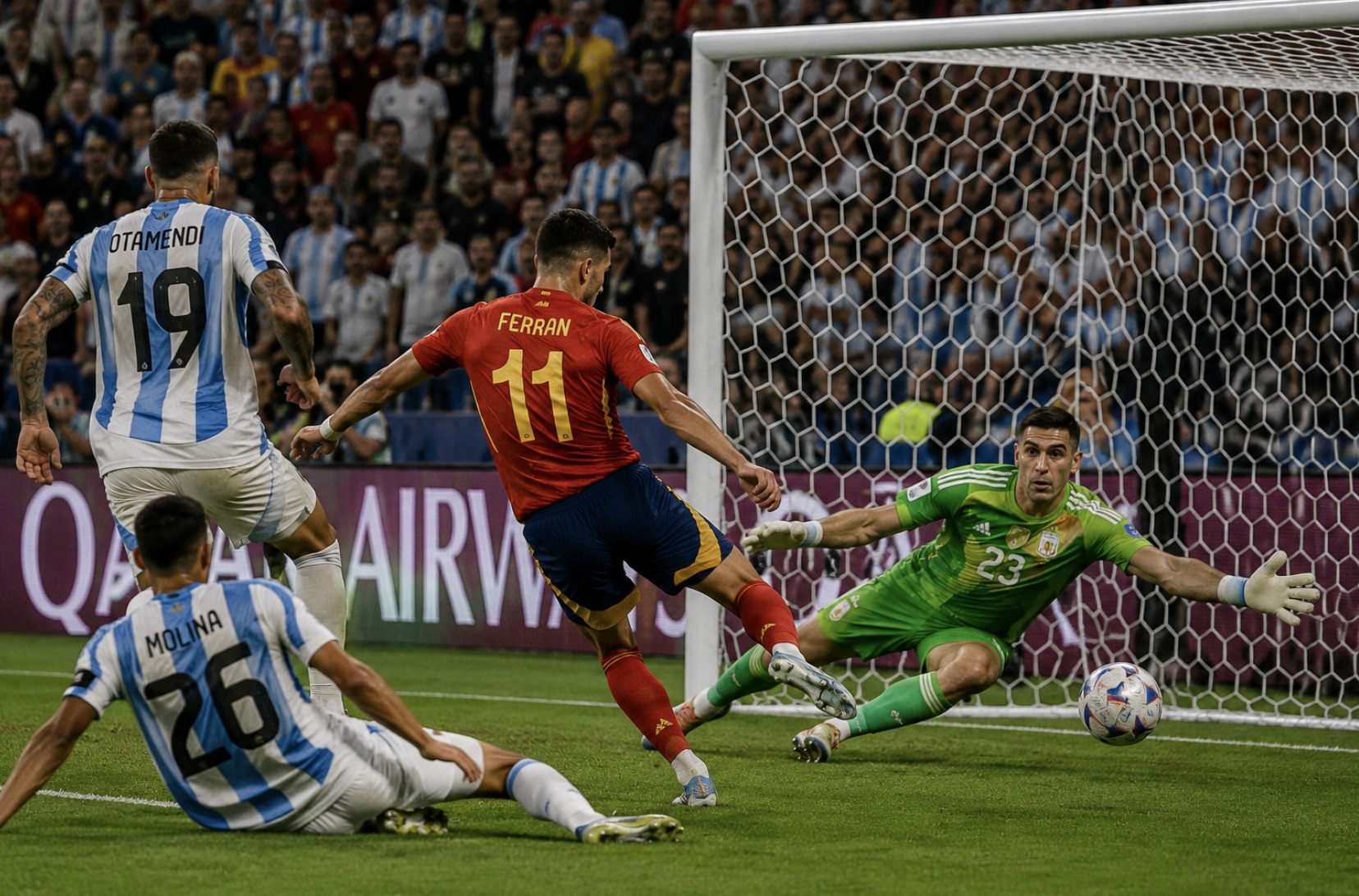
A final decided by nerve, not chaos
The story of the final is the story of two teams unwilling to give anything away, and of one that finally cracked the deadlock without ever losing its composure. Spain did not overwhelm Argentina; they contained them, controlled the tempo, and waited. For long stretches the match was a chess game rather than a shootout, the kind of tight, cagey final that frustrates neutrals hoping for goals but rewards the side with the greater patience. Spain trusted that their structure would hold and that an opening would come, and rather than forcing the issue and risking their shape, they held their nerve through ninety minutes and into extra time.
The decisive moment, when it arrived, was fittingly undramatic in its build-up and enormous in its consequence. Ferran Torres, introduced from the bench, delivered the goal that separated the sides in extra time, the reward for a substitute's fresh legs and a team's refusal to gamble everything before the right chance presented itself. That a substitute settled the biggest match in football is its own small lesson in modern tournament management: finals are increasingly decided in the closing stages by the players brought on to change them, and Spain's bench proved as important as their starting eleven. One goal was all it took, because one goal was all Spain ever needed.
The defence that defined the tournament
To understand why Spain won, you have to look past the final to the seven matches that led to it, and to a single, staggering statistic. Spain became the first World Cup champion ever to win the tournament while conceding only a single goal across the entire competition. In a modern game obsessed with attacking flair, expected goals and high-scoring spectacle, Spain won the sport's greatest prize by being almost impossible to score against. That is not luck over one match; it is a philosophy sustained over a month, and it is the truest explanation of their success.
Conceding once in an entire World Cup is a feat of collective organisation that borders on the absurd. It requires not just excellent defenders but an entire team defending as a unit, a goalkeeper in command, and a tactical discipline that never wavers even under the pressure of knockout football. Spain built their run on that foundation: control the ball to deny opponents possession, and when possession was lost, defend with a cohesion that gave nothing away. Their attacking talent mattered — you cannot win a World Cup without scoring — but the spine of their triumph was the back-to-front security that meant a single goal was often enough, and frequently more than enough. In a tournament of fine margins, Spain simply refused to be beaten, and that refusal carried them all the way.
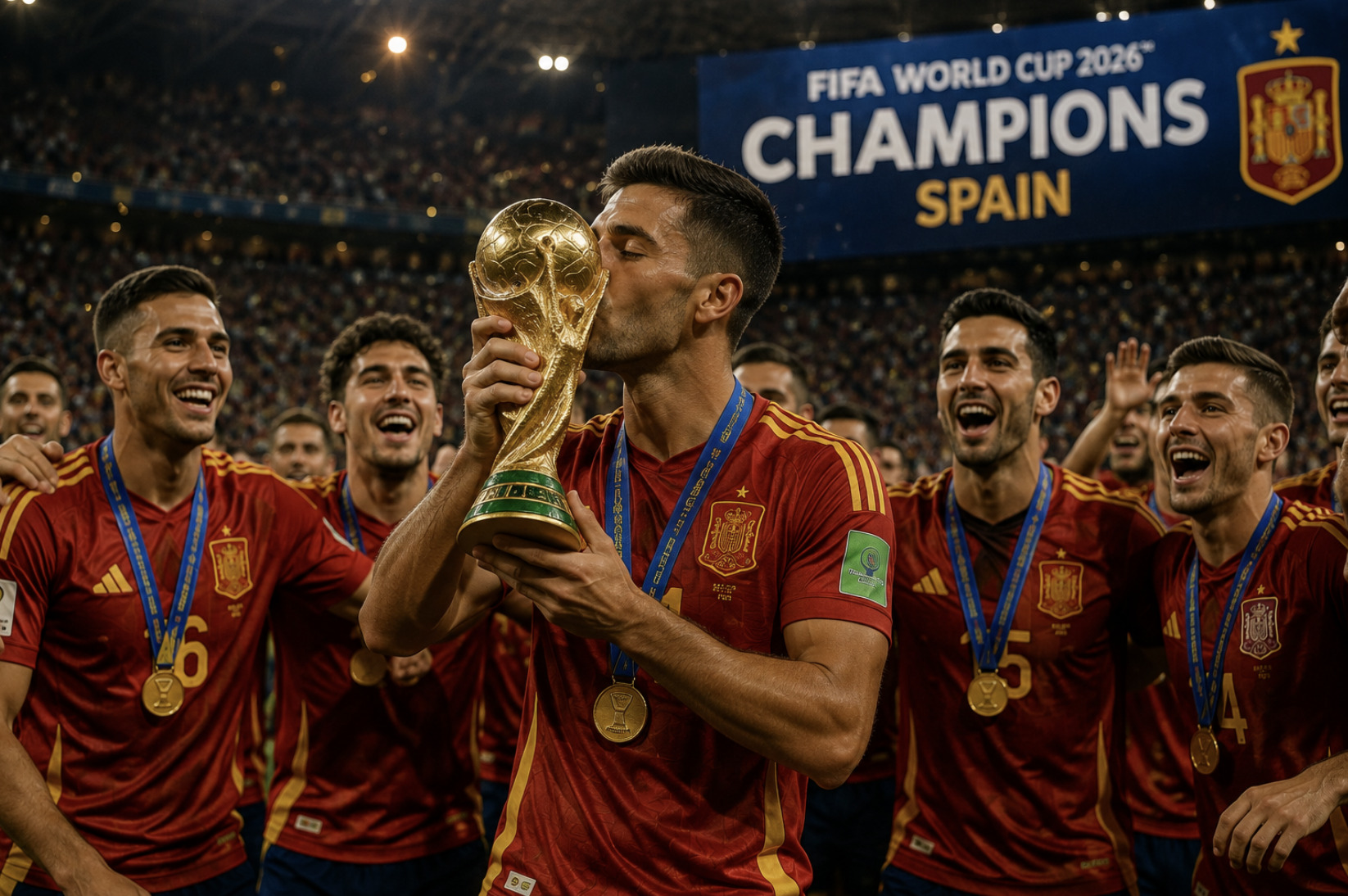
Argentina, and the quiet end of an era
Every champion's story has a fallen rival, and Argentina's exit carried a particular weight. The beaten finalists came up just short, and with their defeat came the quiet close of a chapter, as Lionel Messi's World Cup story ended not with another triumph but with a narrow loss in a final Spain controlled. There was no grand collapse, no humiliation — Argentina reached the final and lost it by the barest margin, to extra time, to a substitute's goal — but the manner of it, subdued and undramatic, felt like the closing of a door rather than the slamming of one.
Argentina's run to the final was itself an achievement, and reaching the last match of a World Cup is beyond almost every nation that enters. But they met a Spain side built specifically to frustrate exactly the kind of football that had carried them there, and against that wall of organisation they could not find the opening they needed. For a generation of Argentine players, and for Messi in particular, the final represented a last, narrow miss at the sport's ultimate stage, and the understated way it ended — a quiet exit after a tight defeat — was in its own way more poignant than any dramatic downfall would have been. Eras in football rarely end with fireworks. More often they close like this: a good team, a close game, and a final that got away.
The record that will outlast the result
Spain's victory would be historic on its own terms — a second world title, won with rare defensive perfection — but its deepest significance lies in a wider achievement that reaches beyond the men's game. With this triumph, Spain became the first nation ever to hold the men's and women's World Cups at the same time. It is a milestone that captures something bigger than a single tournament: the arrival of a national footballing culture strong enough, deep enough and well-structured enough to be the best in the world across both the men's and women's game simultaneously.
That double is a statement about an entire system, not just a squad. Holding both World Cups at once is not an accident of one golden generation but the product of sustained investment, coherent footballing philosophy and depth that runs through a whole country's game. It speaks to development pathways, coaching, and a style of play cultivated at every level, from which both national teams draw. For Spain, it is a moment of genuine historical distinction, the kind that will be cited long after the details of the final have faded, and it reframes their 2026 triumph as part of a larger story about a nation at the summit of the sport in every form it takes. The result won the trophy; the record won a place in history.
What Spain's win tells us about modern football
Beyond the celebration, Spain's success carries a lesson that the sport keeps having to relearn. In an age that prizes attacking data, high pressing and goals above all, a World Cup was won by the team that best mastered control and defence — proof that the fundamentals of organisation, patience and refusing to concede remain as decisive as ever at the very top. Spain did not win by outscoring the world; they won by out-structuring it, by being harder to break down than anyone else and taking the one chance that patience eventually produced. It is a reminder that spectacle and success are not the same thing, and that tournaments are frequently won by the least glamorous virtues.
For everyone who follows the game, that is the enduring takeaway from the 2026 World Cup. The most watched football event on earth crowned a champion defined not by flair but by discipline, not by a torrent of goals but by the near-total refusal to allow any. Spain proved that a single goal, backed by an impregnable defence, can be enough to win the greatest prize in the sport, and that a nation which builds its football properly can stand atop both the men's and women's game at once. It was not always thrilling to watch. It was, however, historic — and history, in the end, remembers the winners and the records far longer than it remembers the scorelines. Spain now own both.
Frequently asked questions
Who won the 2026 World Cup? Spain won the 2026 FIFA World Cup, beating Argentina 1–0 after extra time in the final on 19 July at MetLife Stadium in New Jersey. Substitute Ferran Torres scored the only goal in extra time. It was Spain's second World Cup title.
Why is Spain's 2026 win historic? Beyond the trophy itself, Spain became the first nation ever to hold the men's and women's World Cups at the same time. They also became the first World Cup champion to win the tournament while conceding only a single goal across the entire competition — a remarkable feat of defensive organisation.
How did Spain win the final? Through control and defensive discipline rather than attacking spectacle. Spain contained Argentina, dominated possession, and held their shape through ninety minutes and into extra time, where substitute Ferran Torres struck the decisive goal. The 1–0 result reflected the patient, security-first approach that defined their whole tournament.