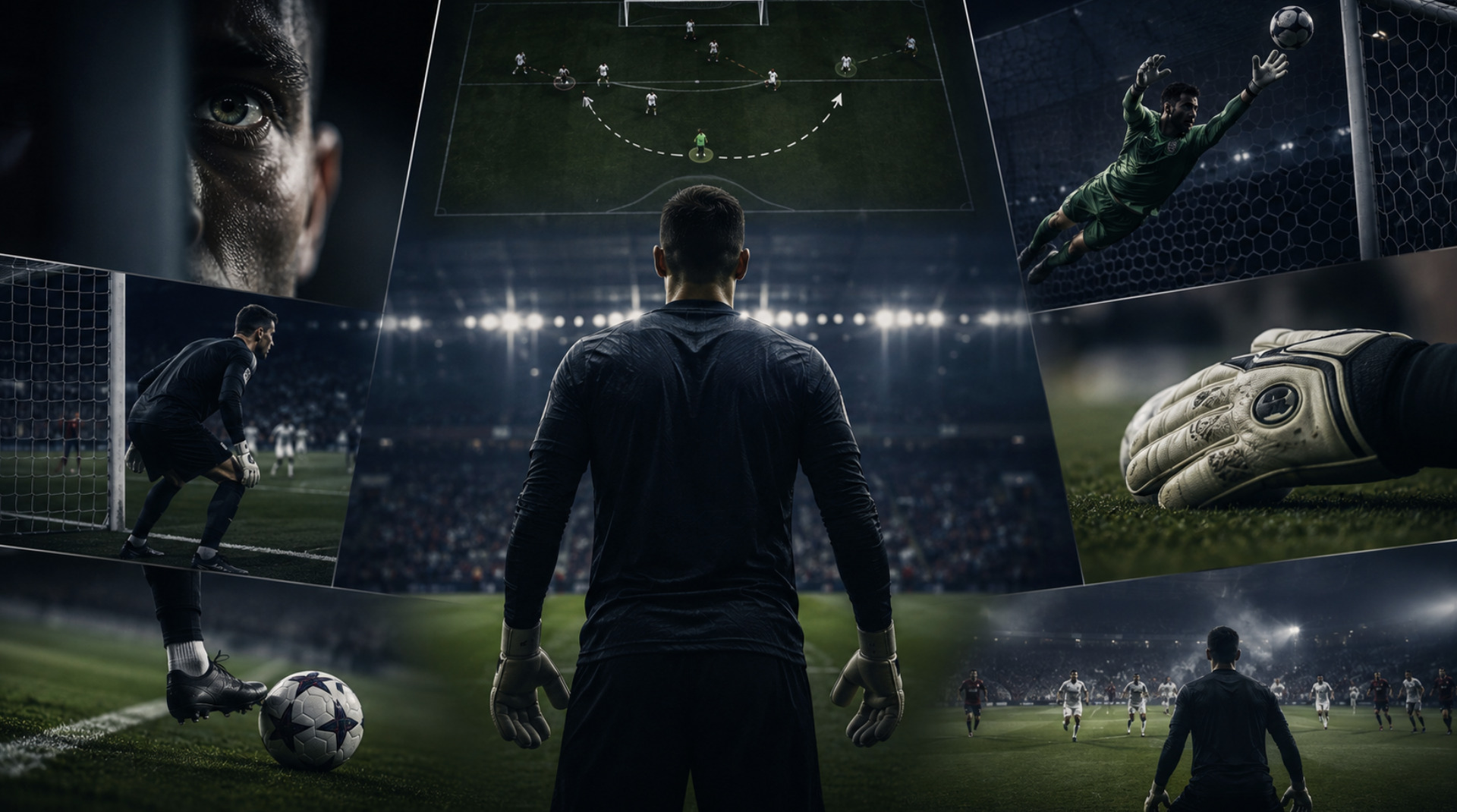
Goalkeeping is the most misunderstood job in football. Watch a highlight reel and you would think the position is about spectacular saves — the flying fingertip stop, the point-blank reflex block. Those moments matter, but they are the smallest part of what makes a goalkeeper elite. The real gap between a world-class keeper and a merely good one is invisible on a highlight reel and often invisible during a match, precisely because the best goalkeepers make hard things look routine. To understand the position properly, you have to look past the saves.
Saves are the easy part to see
Every professional goalkeeper can make saves. At the top level, the ability to react quickly and stop a well-struck shot is a baseline requirement, not a distinguishing feature. When fans praise a keeper for a string of spectacular stops, they are often watching a goalkeeper who has been forced into those situations by poor positioning or bad decisions earlier in the move. The most dramatic saves sometimes reveal a flaw rather than a strength.
The best goalkeepers, by contrast, frequently look underemployed. Shots seem to find them; crosses seem to drop into their hands; one-on-ones seem to end tamely. This is not luck. It is the result of work done before the shot is ever taken, work that removes the need for heroics. Judging a goalkeeper by his save count alone is like judging a defender by how many last-ditch tackles he makes — it can mean he is brilliant, or it can mean he keeps getting caught out. The number itself tells you very little.
Positioning is the hidden skill
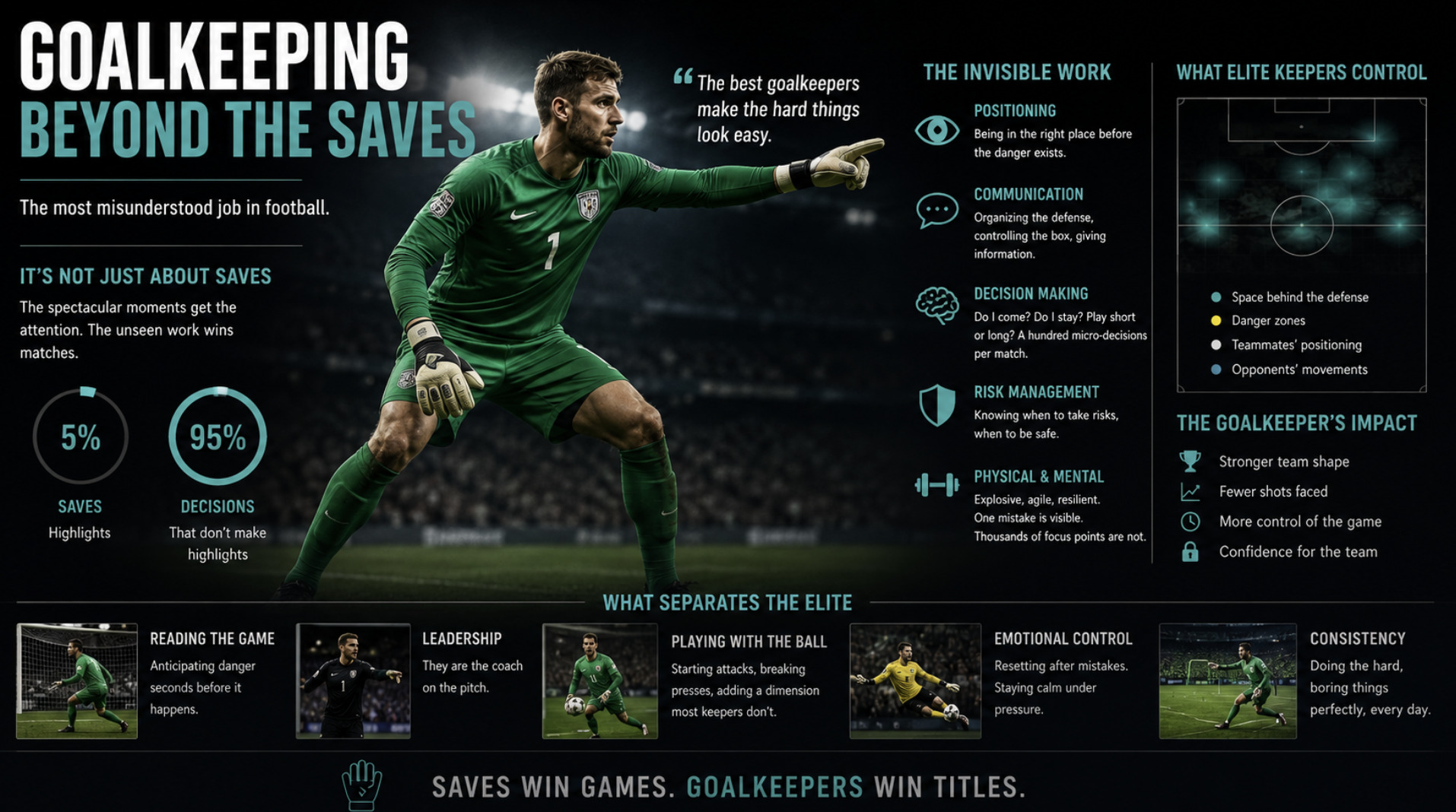
The single biggest separator is positioning. A world-class goalkeeper is almost always in the right place, which is why so many shots hit him or miss the target entirely. Elite keepers read the game constantly, adjusting their angle and depth as play develops so that when a shot finally comes, the difficult save has been turned into a simple one. They narrow the shooter's options by standing exactly where the ball is most likely to go, and they do it so smoothly that it never looks like a skill at all.
This reading of the game extends to the whole penalty area. Great goalkeepers command their box on crosses, judging flight and timing so well that they claim balls others would leave. They control the space behind a high defensive line, sweeping up through balls before attackers reach them. Much of this happens with the keeper barely touching the ball, and none of it shows up as a save. Yet it is the foundation of elite goalkeeping — the difference between a keeper who reacts to danger and one who quietly prevents it from forming. The same principle of reading a game before it unfolds applies across the pitch, something we look at in How to Read a Football Match Like a Coach.
Decisions under pressure
Goalkeeping is a job defined by decisions, most of them made in a fraction of a second. Should the keeper come for the cross or hold his line? Rush out to meet the one-on-one or stay big and wait? Punch or catch? Each choice carries enormous risk, because a goalkeeper's mistakes lead almost directly to goals in a way that an outfield error rarely does. What separates the best is not that they always choose correctly, but that they choose well far more consistently and rarely compound one error with another.
This decision-making is closely tied to composure. A good goalkeeper can be rattled by a mistake, a hostile crowd or a run of pressure; a great one resets almost instantly and keeps making clear-headed choices. The ability to concentrate for ninety minutes while barely being involved, then produce the right decision the moment it matters, is a rare psychological skill. Goalkeepers can go twenty minutes without a meaningful touch and then face a situation that decides the match. Staying sharp through that emptiness is part of what the elite do better than anyone.
The keeper as first attacker
The modern game has added a whole new dimension to the position: distribution. A world-class goalkeeper today is expected to be the first phase of his team's attack, comfortable in possession, able to play out under pressure and pick passes that break an opposition press. The best keepers read when to play short and invite pressure, when to go long and relieve it, and how to use the ball to set the tempo of a match. A goalkeeper who cannot contribute in possession is now a genuine limitation, however good his shot-stopping.
This shift has raised the bar dramatically. It is no longer enough to keep the ball out; a top goalkeeper must also help put his team on the front foot. The role now blends the old demands of the position — bravery, reflexes, aerial command — with the technical composure once expected only of midfielders. The goalkeepers regarded as truly elite are those who excel at both halves of the job, and that combination is far rarer than raw shot-stopping ability alone.
Judging a goalkeeper properly
Put all of this together and a clearer picture emerges of what separates the world-class goalkeeper from the good one. It is rarely the saves, though they can make them. It is the positioning that removes the need for saves, the command of the box that snuffs out danger early, the decisions that stay right under pressure, the composure that survives a mistake, and the distribution that turns defence into attack. These qualities are subtle, cumulative and hard to spot in a single moment, which is exactly why the position is so easy to misjudge.
The next time a goalkeeper seems to have an easy afternoon, it is worth asking whether he was lucky or whether he made it look that way. Often the quietest performance is the best one, and the keeper who never had to dive spectacularly was simply always standing in the right place. Greatness in goal is the art of making the extraordinary unnecessary — and once you learn to see it, you never watch the position the same way again.