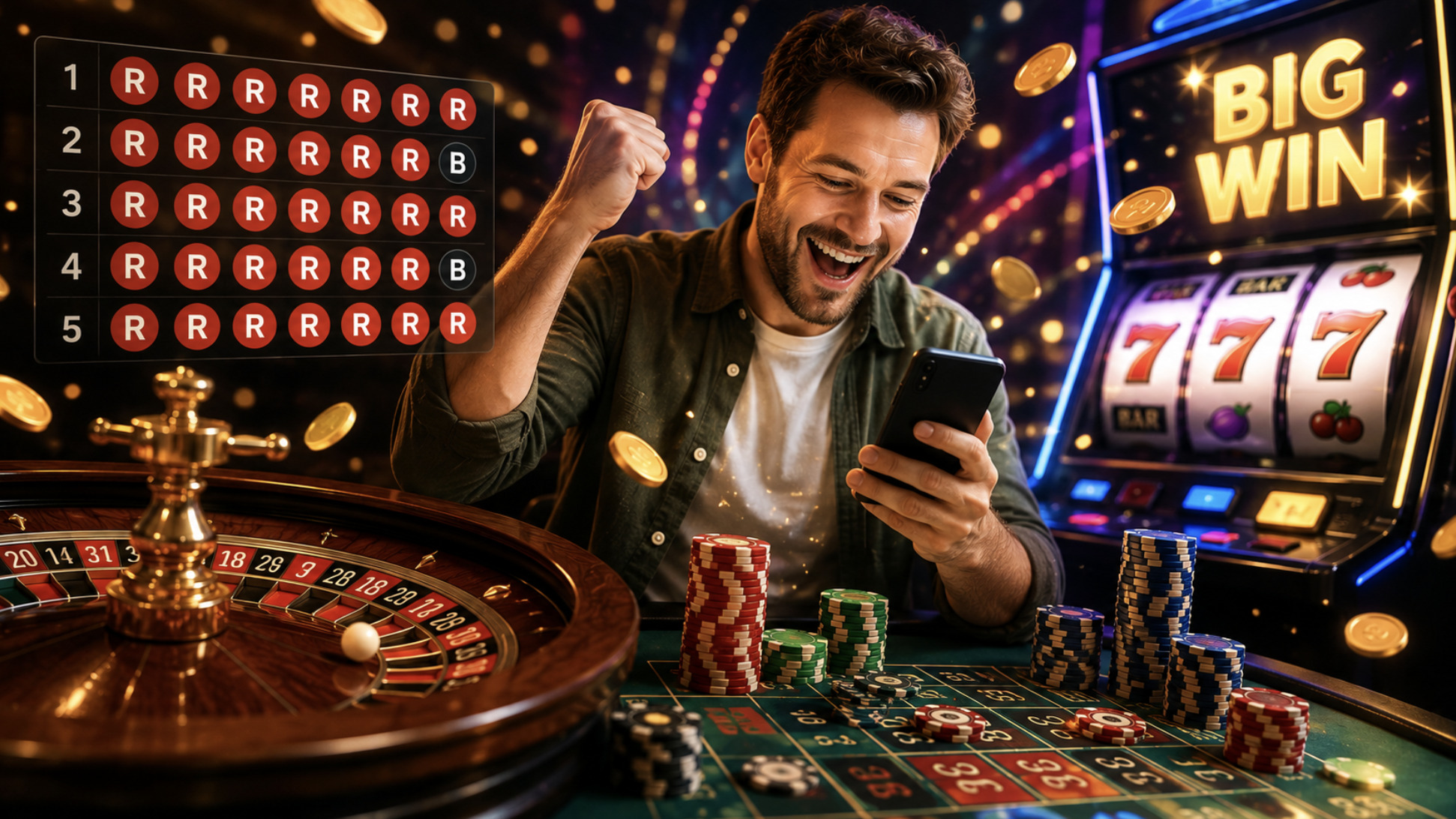
A striker has missed his last five penalties. The commentator says he is "surely due" to score this one. A roulette wheel has landed on red eight times running, and half the table piles onto black because it "has to" come. A team has lost six on the trot, so the pundits agree they are "due a win." In each case the human brain has performed the same confident calculation, and in each case it has calculated wrong. The belief that a run of one outcome makes the opposite outcome more likely is called the gambler's fallacy, and it is one of the most persistent errors the mind makes. It shapes how we watch sport, how people bet, and how badly we misunderstand chance — and almost nobody is immune.
The wrong instinct, stated plainly
Here is the fallacy in its purest form. Flip a fair coin five times and it comes up heads every time. What are the odds the next flip is tails? The instinct screams that tails is overdue, that the universe owes us a correction, that after so much heads the balance must be restored. The instinct is wrong. The next flip is still fifty-fifty, exactly as it was on the first, because the coin has no memory. It does not know what it did five seconds ago and it is under no obligation to even things out. Each flip is independent, and independence means the past results carry precisely zero information about the next one.
This is the hard truth the gambler's fallacy refuses to accept: for genuinely random, independent events, previous outcomes have no bearing on what comes next. A run of reds does not make black "due." A slot that has not paid in a hundred spins is not "ready." The wheel and the reels, like the coin, have no memory and no sense of fairness. The fallacy feels so right precisely because it appeals to a deep intuition that things should balance out — and over enormous numbers of trials they roughly do — but that long-run tendency does not reach back and load the next individual spin. Confusing the two is the whole mistake.
Why the brain is built to get this wrong
It would be comforting to think the fallacy is a beginner's error, something only the naive fall for. It is not. It is baked into how human cognition works, which is why experienced gamblers, seasoned fans, and people who genuinely understand the maths still feel its pull. We are pattern-detecting animals. For most of our history, spotting patterns — that rustle means a predator, those clouds mean rain — was a survival skill, and the brain is relentlessly good at it. The problem is that this machinery does not switch off in front of a roulette wheel or a penalty shootout. It sees a streak and insists on finding meaning in it, even when the honest answer is that the streak means nothing at all.
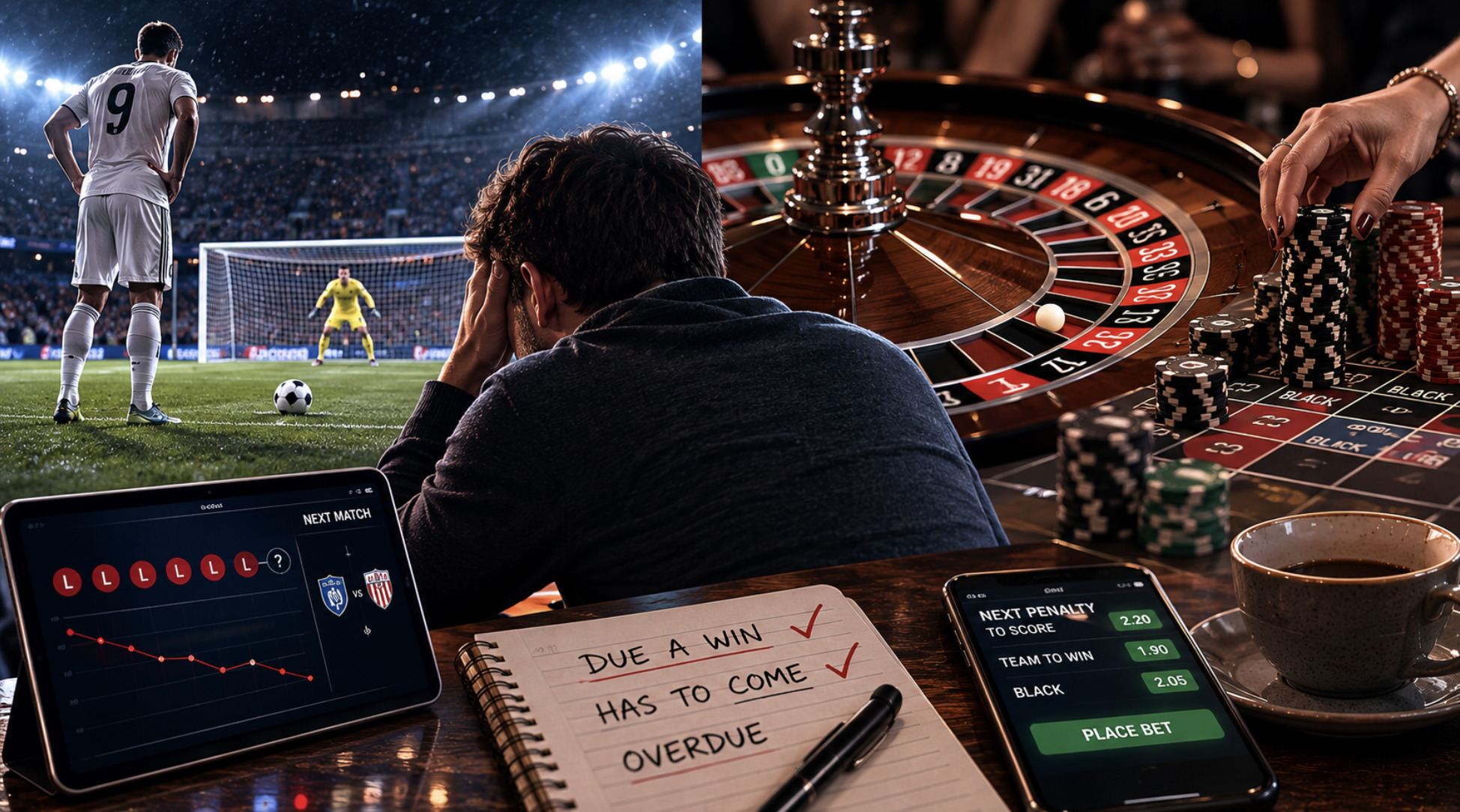
Layered on top is our discomfort with randomness. True randomness produces clumps and streaks far more often than people expect — five heads in a row is entirely ordinary over enough flips — but to a pattern-seeking mind a streak looks like a trend that must break. So we invent the correction that is "due." Recognising this is oddly freeing, because it reframes the streak we are staring at: not a force building toward a reversal, but simply what randomness looks like when you watch it closely. The same appetite for the unknown that makes sport thrilling, which we explored in why uncertainty makes every competition more exciting, is the appetite the fallacy hijacks — turning the pleasure of not-knowing into a false certainty that we do.
Where sport is the exception — and where it isn't
Now the twist that makes sport genuinely interesting, and that a careful fan has to hold alongside everything above: sport is not a coin. A penalty taker is not a random-number generator. When a striker has missed five penalties, it is not obviously true that previous results carry no information, because a human being is involved — and humans have confidence, form, fatigue and nerve. It is at least arguable that five misses have dented his belief and made the sixth more likely to go wrong, or, conversely, that he has worked on it and is due in a real, causal sense. Unlike the coin, there may be an actual mechanism linking past to present.
This is the crucial distinction, and it cuts both ways. In games of pure chance — roulette, slots, a coin — the events are independent, the fallacy is simply false, and no run tells you anything about the next outcome. In sport, outcomes are not fully independent, because psychology, skill and circumstance genuinely connect one moment to the next, so "form" and "momentum" are not always illusions. But — and this is where fans go wrong in the other direction — that does not license reading destiny into every streak either. The honest position is uncomfortable: some sporting streaks reflect a real underlying cause, many are just the same random clumping that fools us at the roulette table, and telling the two apart is genuinely hard. The fan who assumes every run means something is as mistaken as the gambler who assumes it means nothing.
The costly version of the mistake
The fallacy stops being a curiosity and starts costing money the moment it meets a wager, which is where clear thinking matters most. Someone who believes black is "due" after a run of red, or that a slot is "ready" to pay after a cold streak, is making decisions on a belief that is flatly untrue for independent events, and the maths does not care how strongly they feel it. This is exactly the reasoning that platforms built around chance quietly rely on — the streak-watching, the sense of a payout owed. It is worth understanding that when you sit at a roulette table or open a game at an online brand such as Spin Boss casino, each spin is independent of the last, the previous results are genuinely irrelevant to the next, and any feeling that an outcome is "due" is the fallacy talking, not the odds. The house edge is a fixed feature of the maths, and no streak, hot or cold, changes it.
None of that is an argument that games of chance are sinister, only that they should be met with an accurate model of how they work. The person who understands that outcomes are independent, that the "due" outcome is a myth, and that the edge never sleeps, is far better placed to treat such games as what they are: paid entertainment with a built-in cost over time, never a system to be beaten by tracking streaks. It is the same clear-eyed reading we brought to the numbers themselves in what RTP in slots really means — a long-run average, not a promise about your next spin.
Watching streaks with clear eyes
The gambler's fallacy endures because it sits at the intersection of two things the brain does automatically: hunt for patterns and crave fairness. Put those together in front of anything random and the mind manufactures a streak-breaking correction that the universe never agreed to. Seeing through it does not make you immune to the feeling — the "surely he's due" will still whisper during the next shootout — but it lets you recognise the whisper for what it is.
The reward is a sharper way of watching. You can appreciate a genuine hot streak in sport while staying sceptical about whether it is form or just noise; you can enjoy the drama of a run without mistaking it for destiny; and you can approach any game of pure chance knowing that its past results are exactly as informative as a coin's memory — which is to say, not at all. The streak that feels so meaningful is usually the streak that isn't there. Learning to tell the difference is one of the most useful things a sports fan, and anyone who ever places a bet, can carry around. And if the pull to chase a "due" result ever starts feeling less like fun and more like a need, that is the moment to step back — support is always available.