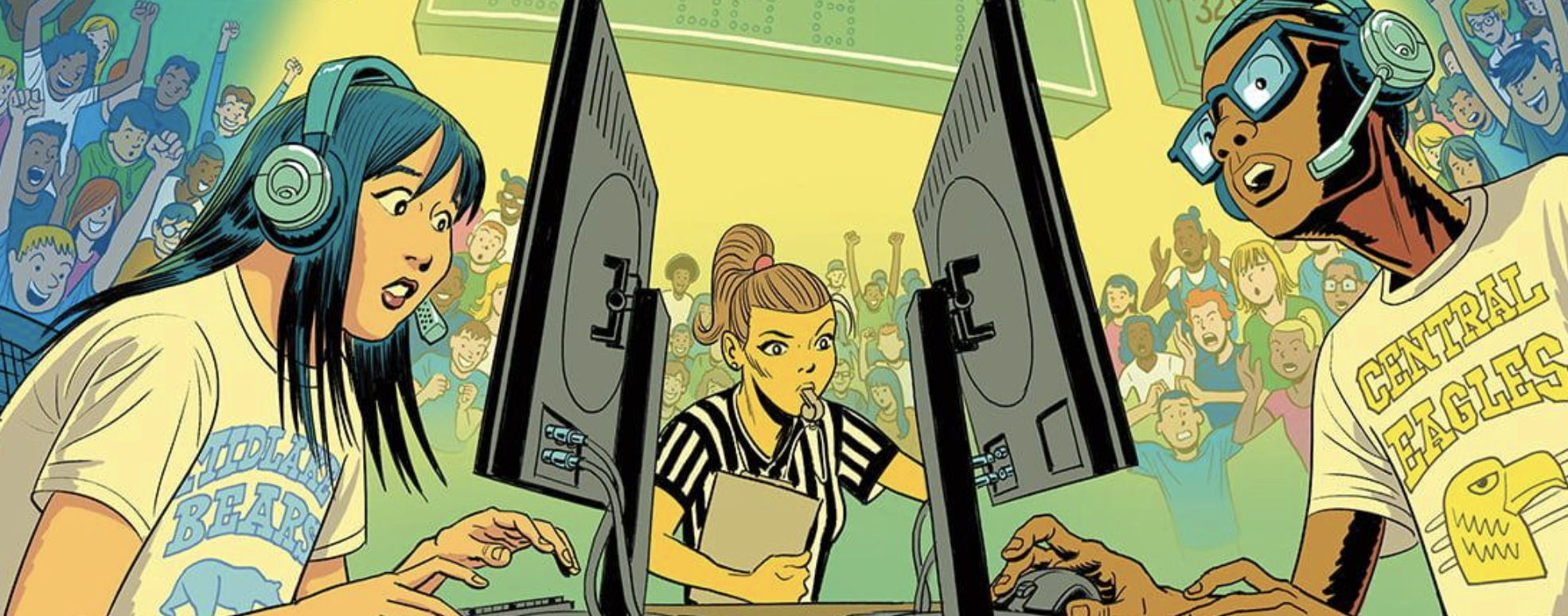
In 1993 a teenager dropped a quarter into an NBA Jam cabinet in a shopping-mall arcade and, within thirty seconds, was watching a digital Shaquille O'Neal leap improbably across half the court to dunk over a flaming Charles Barkley to the announcer's roar of "He's on fire!" Thirty years later a different teenager opens Rocket League on a gaming PC and, within thirty seconds, is steering a rocket-propelled car through the air to head a giant ball into a goal at the opposite end of an arena. The graphics have improved beyond recognition. The technology has changed completely. The platforms are unrelated. But the structural experience — the immediate readability, the cartoon physics, the exhilarating impossibility, the under-a-minute round — is, in any meaningful sense, the same game.
That continuity is striking, because the consensus opinion in the video-game press for most of the past three decades has been that arcade sports games were a transitional form. The realistic simulator was supposed to replace them: more authentic, more deep, more demanding of skill. Year after year, Madden NFL, FIFA, NBA 2K, and MLB The Show added complexity, realism, broadcast-quality presentation, real player likenesses, and franchise modes that simulated entire seasons. The arcade titles, by this logic, were supposed to fade out as the audience matured and the technology improved. They didn't. They are still here, doing exactly what they were doing in 1993, and in some areas of the market they are doing more business than the simulators that were supposed to inherit their position. It is worth asking why.
The arcade tradition
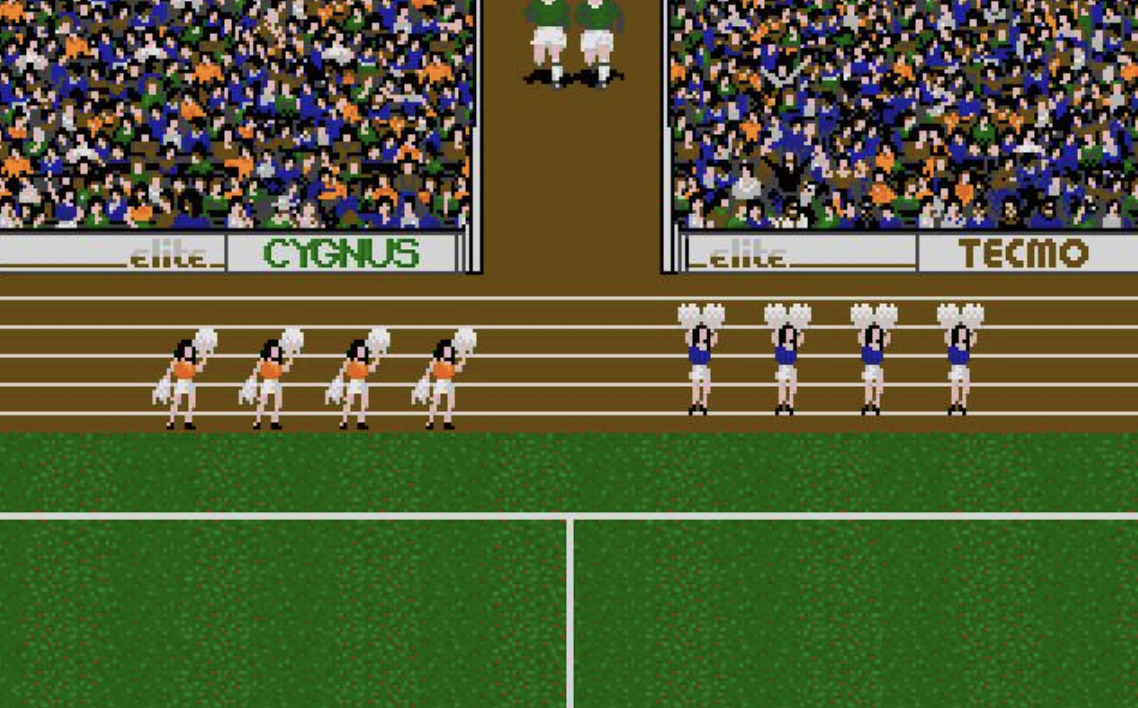
The lineage is older than most casual observers remember. Atari's Pong, released in 1972, was already an arcade sports game in every meaningful sense — abstracted ping-pong reduced to its play essentials, two paddles, instant readability, addictively short rounds. Track & Field, released by Konami in 1983, codified the model for multi-event athletics: rapid button-mashing, exaggerated outcomes, no patience required. By the early 1990s the genre had matured into a recognisable design school whose definitive titles arrived in rapid succession. Midway's NBA Jam in 1993 sold more arcade cabinets than any game before it; its sequel NFL Blitz in 1997 applied the same formula — seven-on-seven football, no penalties, dramatic hits, plays that ran a quarter of the field — to a sport whose simulation counterpart was already deep into its own development arc with John Madden Football.
What these games shared was a coherent design philosophy that the industry has, in retrospect, never quite articulated as one. The arcade sports title compresses a real sport into the components that produce visible drama, exaggerates them past the point of physical possibility, and removes everything else. Substitutions, fouls, training camps, salary caps, player fatigue — all of the apparatus that simulation games would later elevate to central features — are either invisible or absent. What is left is the spectacle, the immediate decision, and the moment worth showing to the friend on the other side of the sofa.
The simulation wave
The thirty-year arc of sports gaming since Madden Football arrived in 1988 has been, principally, a story of simulation. EA Sports built one of the largest franchises in entertainment by adding, with each annual release, more depth to FIFA, Madden, and NHL. NBA 2K progressively eclipsed its arcade-leaning competitors through the 2000s with broadcast presentation, real coaching playbooks, deep career modes, and physics engines that approximated the cadence of professional basketball. MLB The Show applied the same approach to baseball; PGA Tour 2K did so for golf.
The assumption underwriting this entire arc was that authenticity was the right north star — that sports gamers fundamentally wanted to play a version of the actual sport, with the actual rules, the actual physics, the actual players, the actual broadcast cameras. The arcade titles, by this logic, were the work of a less sophisticated era; they would lose audience as the simulator improved, as television-quality presentation became technically feasible, and as the demographic of sports gamers aged into wanting "the real thing".
For roughly a decade — from the late 1990s through the late 2000s — the assumption seemed to be vindicated. Arcade sports releases became less frequent. Midway's NBA Jam and NFL Blitz franchises declined. The EA "BIG" brand, which had produced NBA Street, NFL Street, and SSX Tricky, was wound down. The consensus among industry observers held that the genre had peaked.
What didn't happen
It would be a fair summary of the next fifteen years to say that nothing the press predicted came true. The arcade tradition not only did not disappear; it produced some of the most successful video games released anywhere in the world during the decade and a half that followed.
The watershed was Wii Sports, released by Nintendo in 2006 as a bundle with the Wii console. Five mini-games — tennis, baseball, bowling, golf, boxing — each rendered in cartoon proportions with mascot-like Mii avatars, each playable with motion controls in two or three minutes. The game went on to sell over eighty million copies and to become one of the best-selling video games in history. Its audience was overwhelmingly composed of people who would not have called themselves gamers; it sat in living rooms across families that owned no other console title. The lesson, for anyone willing to see it, was that the market for arcade sports had not contracted. It had simply been waiting for the right access point.
The second watershed was Rocket League, released by the small studio Psyonix in 2015. Its premise — soccer, played by rocket-propelled cars, in a closed arena, three players per side, five minutes per match — sounded, on paper, like the kind of pitch that should not have escaped a brainstorm. It became one of the most successful multiplayer games of the late 2010s, a major presence in international esports, and a viable competitive title for nearly a decade. Rocket League did everything that the arcade tradition had always done — visually legible play, exaggerated physics, instant readability, short matches, social architecture — and applied it to an entirely synthetic sport rather than an existing real one. The success demonstrated that the appetite for arcade sports was not nostalgic. It was structural.
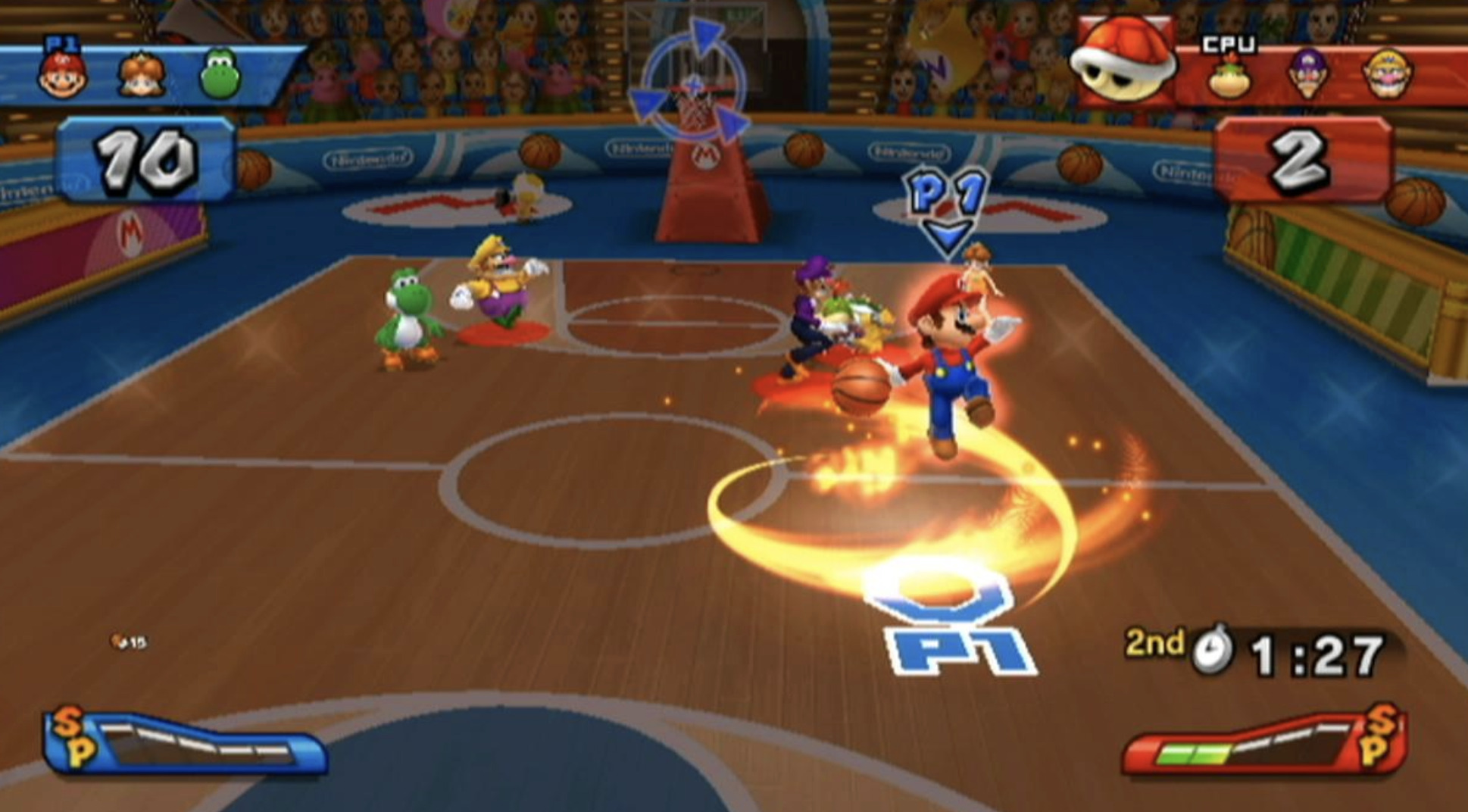
Around these two anchors, the genre re-established itself. NBA Jam received re-releases. NBA Playgrounds and NBA 2K Playgrounds arrived in 2017 and 2018. Nintendo released Mario Tennis Aces (2018), Mario Golf: Super Rush (2021), Mario Strikers: Battle League (2022), and Nintendo Switch Sports (2022). Knockout City — arcade dodgeball — launched in 2021 to substantial uptake. Mobile gaming, where arcade controls work and simulation controls do not, populated entire categories with arcade-styled sports titles. The pattern was unmistakable. Arcade sports were not declining. They were occupying a different and growing portion of the market.
Why the assumption was wrong
To understand the persistence, it helps to identify what the conventional wisdom had got wrong. The error was the assumption that arcade and simulation were two stages of the same evolution — that the arcade game was a less complete version of the simulator, and that as production values rose the arcade design would be absorbed into something more ambitious. This was a category mistake. The two were never competing on the same axis. They were different design philosophies serving different needs, and the persistent demand for arcade sports over three decades is the evidence that those needs do not converge.
Several specific factors compose the difference. The first is the time-to-fun ratio. An arcade sports match begins and ends inside three to five minutes; in many titles, a complete round runs under ninety seconds. A simulation match, played in any of its serious modes, requires substantially longer — often twenty minutes for a single contest, hours for a season. In an environment of fragmented attention, the brief, complete unit of play has a structural advantage that the simulator cannot replicate without abandoning its own design premises.
The second is visual legibility. Arcade sports use cartoon proportions, exaggerated animations, and clear colour coding deliberately. A spectator can understand what is happening on screen in the first second of watching. Simulators, by contrast, look like broadcast television, which is impressive but cognitively expensive — the viewer needs to identify players, positions, and game state from a low-information image. For local multiplayer, for streaming, for casual play, legibility wins.
The third is the architecture of social play. Arcade sports games are designed, almost without exception, around two-to-four-player local co-operative and competitive play. The cabinet in the arcade became the controller on the sofa. Simulators, by their nature, are deeper, more solitary, more compatible with one player against the AI than with two friends on the same couch. The genre that supports the sofa survives because the sofa is still a place where people play together.
The fourth is the ratio of spectacle to skill. Arcade sports are designed to produce the moment worth showing — the impossible play, the dramatic comeback, the absurd score. They optimise for stories. Simulators optimise for verisimilitude, and verisimilitude is a different commercial commodity. There is, it turns out, a large permanent market for the absurd story.
The fifth is portability. The arcade design translates to mobile devices, casual platforms, and esports broadcasts in ways that the simulator does not. The competitive scene around Rocket League exists in significant part because the matches are five minutes long and easy to follow; an equivalent simulator scene struggles with the same problems an actual sports broadcast struggles with — pacing, length, comprehensibility for the casual viewer.
The same principle appears repeatedly across digital entertainment categories. Products that survive for decades are often not the most realistic or technically sophisticated but the ones that optimise accessibility, immediacy, and repeatability. The user does not always seek the deepest possible simulation; quite often, they seek an experience that can be understood instantly and enjoyed without extensive preparation. A Dicepalace online casino operates according to a similar logic. Its appeal is not rooted in reproducing every complexity of a physical casino environment but in delivering a clear, legible, and immediately accessible form of entertainment that fits naturally into modern patterns of fragmented attention. In both cases, the enduring success comes from recognising that convenience, clarity, and rapid engagement are not compromises compared to realism — they are design objectives in their own right. The history of arcade sports demonstrates that audiences consistently reward experiences that minimise friction while maximising participation, a lesson that continues to shape successful digital platforms across very different industries.
What the persistence reveals
The deeper observation is that the assumption of replacement is a particular kind of progress narrative that the video-game industry inherits from technology more generally — the idea that newer, more complex, more "realistic" versions of an experience will supersede earlier, simpler, less complete ones. The history of arcade sports games is one of the cleaner cases in which the narrative is false. Realism is not the only legitimate destination for a sports game design. Spectacle is also a destination. Accessibility is a destination. Social play is a destination. Short-form play is a destination. Each of these has its own audience, and the audiences are not the same.
The two genres are, on this picture, not competitors but parallel solutions to different problems. The simulator answers the question "what would it feel like to play, manage, and inhabit this sport?". The arcade game answers the question "what would be the most entertaining version of this sport for two people on a sofa to play for ten minutes?". Both are valid questions. The market keeps demonstrating that both have permanent, substantial, partly overlapping audiences who want different things from the same source material.
The arcade tradition was never going to disappear, because the need it satisfies is not satisfied by what was supposed to replace it. Three decades after NBA Jam lit its first player on fire, the people in front of the screens are still asking for the cartoon dunk, the rocket-propelled goal, the absurd moment — and the industry, having tried for years to predict otherwise, has now made peace with the fact that they always will.